

Sunscreen for Skin of Colour and Melasma: Why SPF 50+ Is Not Enough
SPF measures protection against ultraviolet B. It tells you almost nothing about visible light — and visible light, not UV, is the dominant driver of melasma and post-inflammatory hyperpigmentation in skin of colour. This is the gap that makes so many patients say “I wear SPF 50+ every day and my pigment still gets worse.”
This page translates our 2025 review in the Australasian Journal of Dermatology into practical advice: what actually blocks visible light, how to read a label, how to shade-match, what adequate protection really costs in Australia, and how to get there without spending thousands.
Written by Dr Davin S. Lim, Dermatologist — Brisbane & Sydney · Reading time: 14 minutes
Key points in 60 seconds
- SPF only rates UVB. Australian “broad-spectrum” labelling adds a UVA threshold, but no Australian sunscreen label tells you anything about visible light protection.
- Visible light (400–700 nm) makes up about half of the solar energy reaching your skin and penetrates deeper than UVA or UVB. Below 470 nm it triggers more intense and longer-lasting pigmentation than UVA1 in skin of colour.
- Only tinted sunscreens meaningfully block visible light. Iron oxides plus pigmentary-grade (non-nano) titanium dioxide reduce visible light transmission by 93–98%. Clear and nano mineral sunscreens do not.
- Darker skin is not self-protecting against pigmentation. Higher melanin gives some UVB defence — it does not extend to visible light, and Fitzpatrick III–VI skin pigments more readily in response to it.
- Correct dosing matters more than brand. 2 mg/cm² — about 5 mL (one teaspoon) for face, head and neck. Applying a quarter of the recommended amount can cut effective SPF by around 75%.
- Cost is a genuine clinical barrier. Following reapplication guidelines with an Australian tinted sunscreen costs between AUD $3,040 and $18,250 per year for the face and neck alone.
- Shade matching drives compliance. Most Australian tinted sunscreens offer one or two shades. A visible white or grey cast is one of the top reasons patients with deeper skin stop using them.
- Sunscreen is necessary but not sufficient. Hats (SPF ≈ 7), UPF 40–50 clothing, shade, window film and tinted lenses carry the load sunscreen cannot.
What does SPF actually measure?
SPF is a laboratory measure of how much longer skin takes to redden under a UVB-weighted light source. It is a sunburn number. It was designed to prevent erythema and, downstream, skin cancer — and at that job it works extremely well.
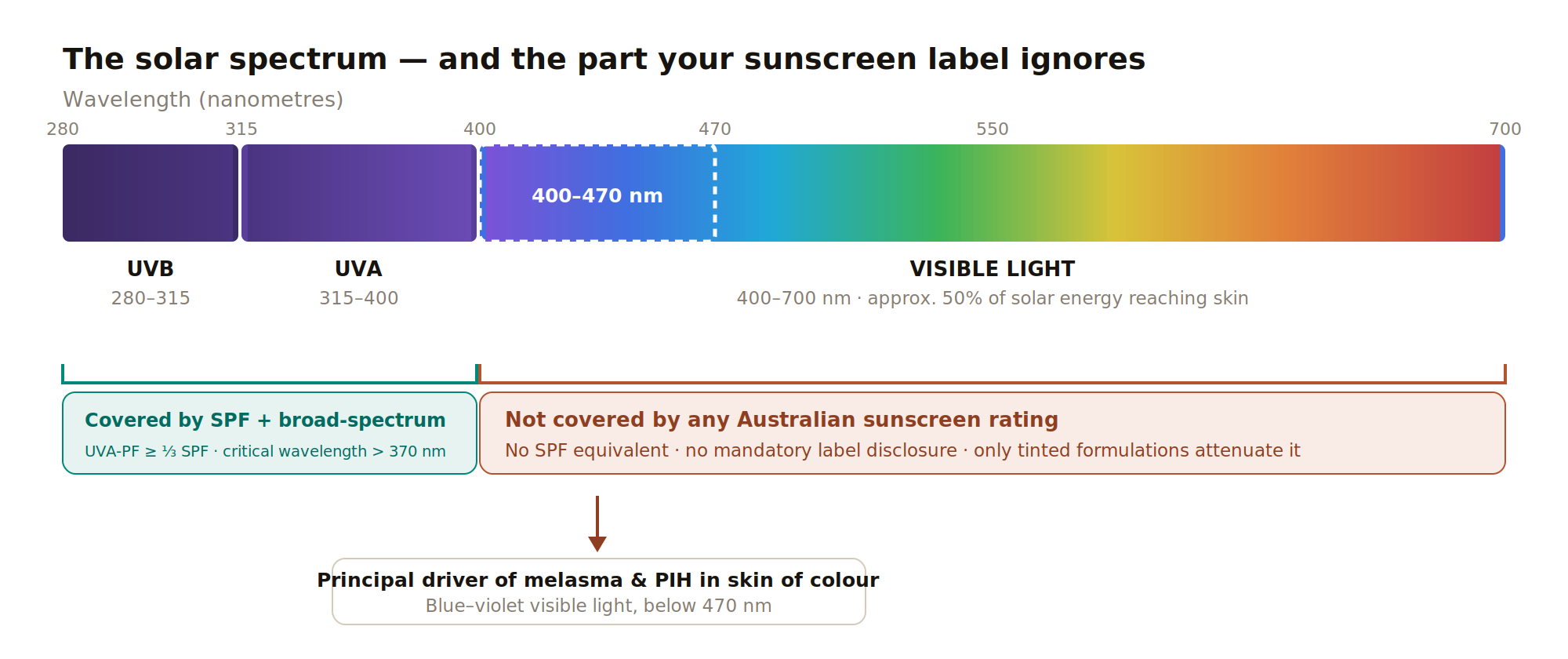
What SPF was never designed to do is predict pigmentation. In Australia, a sunscreen may be labelled “broad-spectrum” once its UVA protection factor reaches at least one-third of its SPF and its critical wavelength exceeds 370 nm.39 That is a pass/fail stamp, not a number — so two products both marked broad-spectrum SPF 50+ can differ substantially in long-wave UVA performance. Japan’s PA+ system and the UK Boots star rating quantify UVA more explicitly; Australia currently does not.
And beyond 400 nm, no rating system applies at all. There is no SPF for visible light, no mandatory disclosure, and no standardised global guideline. A sunscreen can be perfect on every metric printed on the bottle and still let through the wavelengths that are driving your melasma.
This is why so many patients with melasma feel they are doing everything right and still relapse each summer. They are protected against sunburn. They are not protected against pigment.
What is visible light, and why does it drive melasma?
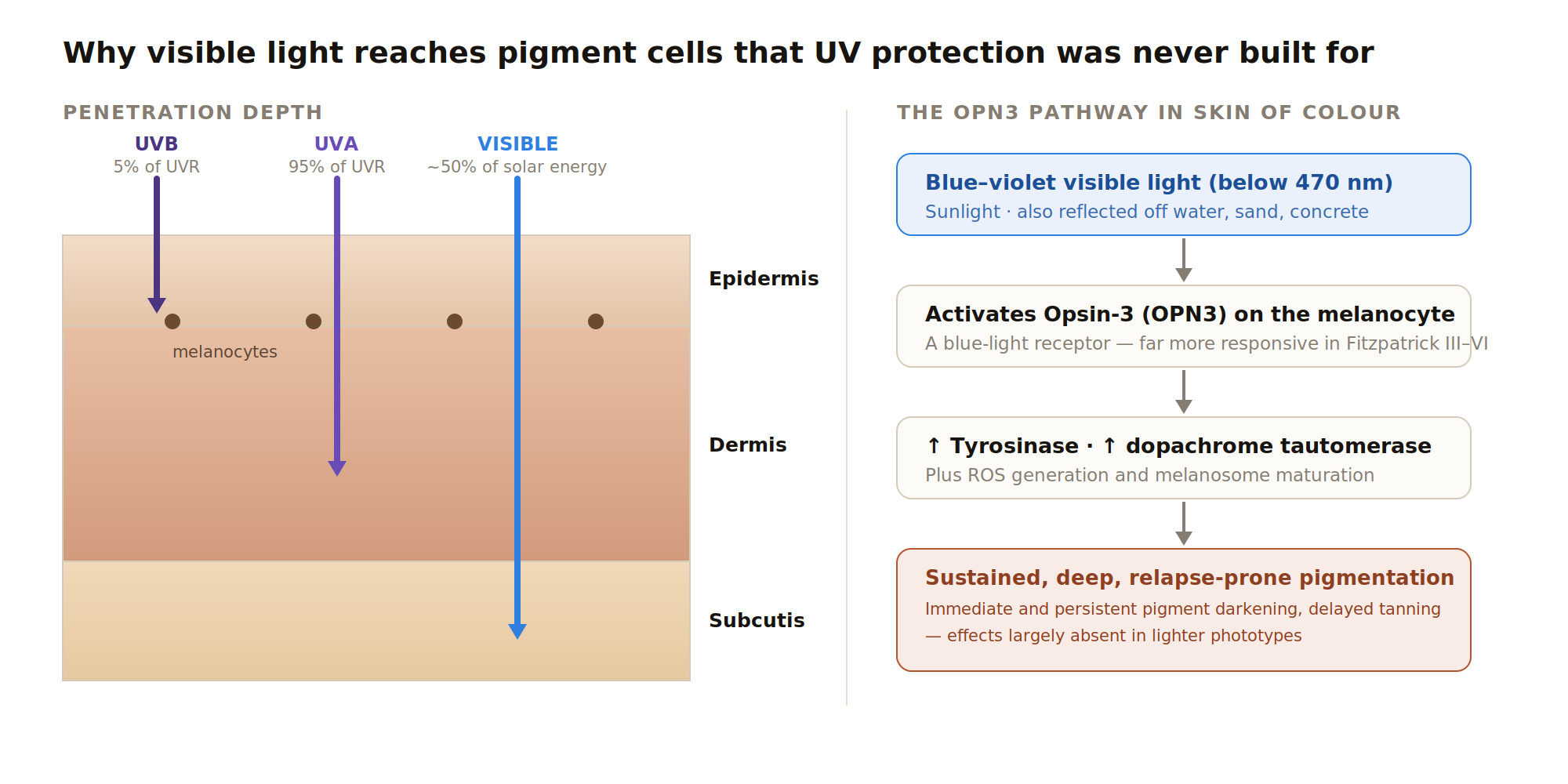
Visible light is the 400–700 nm portion of the spectrum — the part you can actually see. It contributes approximately 50% of the total electromagnetic radiation reaching the Earth’s surface. Because its wavelengths are longer, it penetrates deeper into the skin than either UVA or UVB.1
Three findings from the photobiology literature explain why this matters so much in pigmented skin:
- Visible light below 470 nm induces more potent and longer-lasting hyperpigmentation than UVA1.3 In experimental studies, 90 minutes of summer blue-light exposure (415–467 nm, 38–62.5 J/cm²) produced significant darkening within three hours in skin of colour participants.7
- Darker skin has a receptor for it. Melanocytes express Opsin-3 (OPN3), a blue-light sensor. Activation upregulates tyrosinase and dopachrome tautomerase and stabilises the tyrosinase complex, producing sustained melanin synthesis.7 This pathway is far more active in Fitzpatrick III–VI skin.
- The response is different in kind, not just degree. Lighter skin exposed to visible light shows erythema but not hyperpigmentation. Skin of colour shows immediate pigment darkening, persistent pigment darkening and delayed tanning — effects typically absent in lighter phototypes.8
Your phone and laptop are not the problem. High-energy visible light from screens has an irradiance roughly 100–1,000 times lower than sunlight and is insufficient to induce pigmentation on its own.5 Indoor daylight through a window is a real exposure. Your monitor is not. Spend your money on protection that matters.
Does darker skin actually need sunscreen?
This is the single most common misconception I correct in clinic, and the evidence is unambiguous.
Higher melanin content and larger melanosomes do provide genuine natural protection against UVB — which is why skin cancer incidence is lower in skin of colour. But that protection does not extend to visible light.10 And for the conditions that actually bring people with skin of colour to a dermatologist — melasma, post-inflammatory hyperpigmentation, ashy dermatosis — visible light is the primary action spectrum.
The gap is compounded from both sides. Patients underestimate their need for photoprotection because they rarely burn. And clinicians under-counsel: a 2014 national survey found 85% of Australian dermatologists lacked confidence managing cosmetic concerns in skin of colour, with more than 80% wanting more postgraduate training in the area.14 International data show dermatologists are nine times more likely to counsel lighter-skinned patients about sunscreen than patients with skin of colour.56
Pigmentary disorders are not cosmetic footnotes. Twenty-eight percent of Australian respondents reported a Dermatology Life Quality Index score above 10 out of 30 — a level indicating a very large effect on quality of life.
What actually blocks visible light? Three ingredients, and only three
Australia regulates 29 UV filters as therapeutic goods — 27 organic (chemical) and two inorganic (mineral).39 Of those, the 27 organic (chemical) filters provide no visible light protection at all — oxybenzone and its relatives absorb UVB and short UVA and stop there.11 That leaves just two: titanium dioxide and zinc oxide. And they only work against visible light in their pigmentary-grade, non-nanosized form, which is precisely the form most modern sunscreens avoid because it looks chalky.
So the practical answer is that visible light protection comes from pigments, not filters:
| Ingredient | UVB | UVA | Visible light | Cosmetic note |
|---|---|---|---|---|
| Iron oxides (yellow, red, black) | — | Some long-wave UVA1 | Strong — the key VL absorber | Provides the tint; yellow iron oxide is particularly useful in skin of colour |
| Titanium dioxide — pigmentary grade, non-nano (100 to >1000 nm) | Yes | Yes | Yes — reflects and scatters | May leave a chalky residue; max 25% in Australia |
| Zinc oxide — non-nano | Yes | Yes | Partial — reflects and scatters | Opaque grades protect better but are less elegant |
| Titanium dioxide / zinc oxide — nanosized (<100 nm) | Yes | Yes | No | Absorbs UV photons like a chemical filter; transparent, no VL benefit |
| Organic (chemical) filters — all 27 | Yes | Varies | No | Elegant, invisible, no visible light protection |
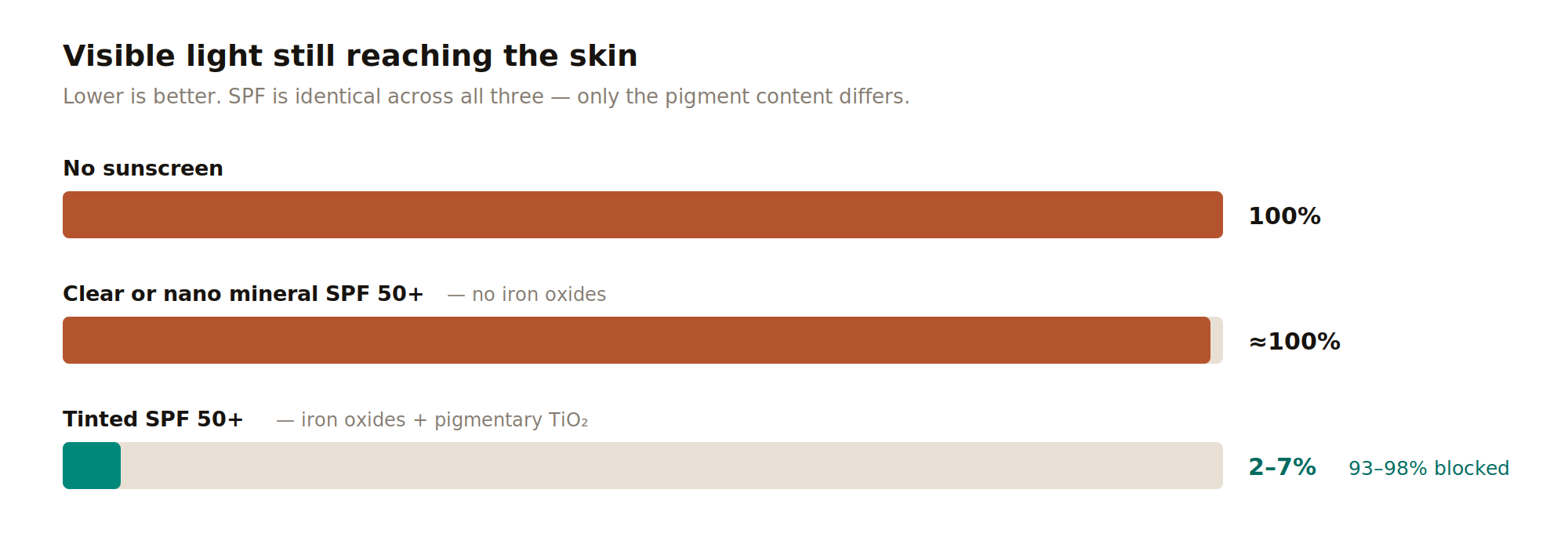
Put together in a tinted formulation, iron oxides and pigmentary titanium dioxide reduce visible light transmission by 93–98%.12 That is the single most important number on this page. Nothing else in the sunscreen aisle comes close.
Yes. In a randomised comparison, 4% hydroquinone paired with a visible-light-protective sunscreen reduced MASI scores by 78%, versus 62% with a UV-only sunscreen.26 Consistent use of iron-oxide-containing sunscreen has been shown to improve dyschromia within 60 days and to prevent relapse at six months.44 Sunscreen that covers visible light is not an optional refinement — it changes treatment outcomes.
How do I tell whether my sunscreen protects against visible light?
Because there is no label claim, you have to work it out from the ingredients list and the colour of the product. Four checks, in order:
- Is it tinted? If the product is white, clear or dries invisible, it does not protect against visible light. Colour is not cosmetic here — it is the mechanism.
- Does the ingredients list contain iron oxides? Look for iron oxides, CI 77491 (red), CI 77492 (yellow), CI 77499 (black). Their presence is the marker of true visible light protection.
- Does it contain titanium dioxide or zinc oxide, and is it non-nano? Pigmentary-grade TiO₂ is the second pillar. If the label emphasises “invisible”, “sheer”, “micronised” or “nano”, the visible light benefit is largely gone.
- Is it SPF 50+ and broad-spectrum? Visible light protection is added to UV protection, not substituted for it. You still need both.
Iron oxides are not classified as UV filters — from a regulatory perspective they are “inactive ingredients”.45 That is precisely why the thing doing most of the work for your pigmentation appears nowhere on the front of the bottle. Schalka and colleagues have proposed a pigment protection factor (PPF), with scores above 7 indicating the best protection, but this is not yet a standardised or required measure.46
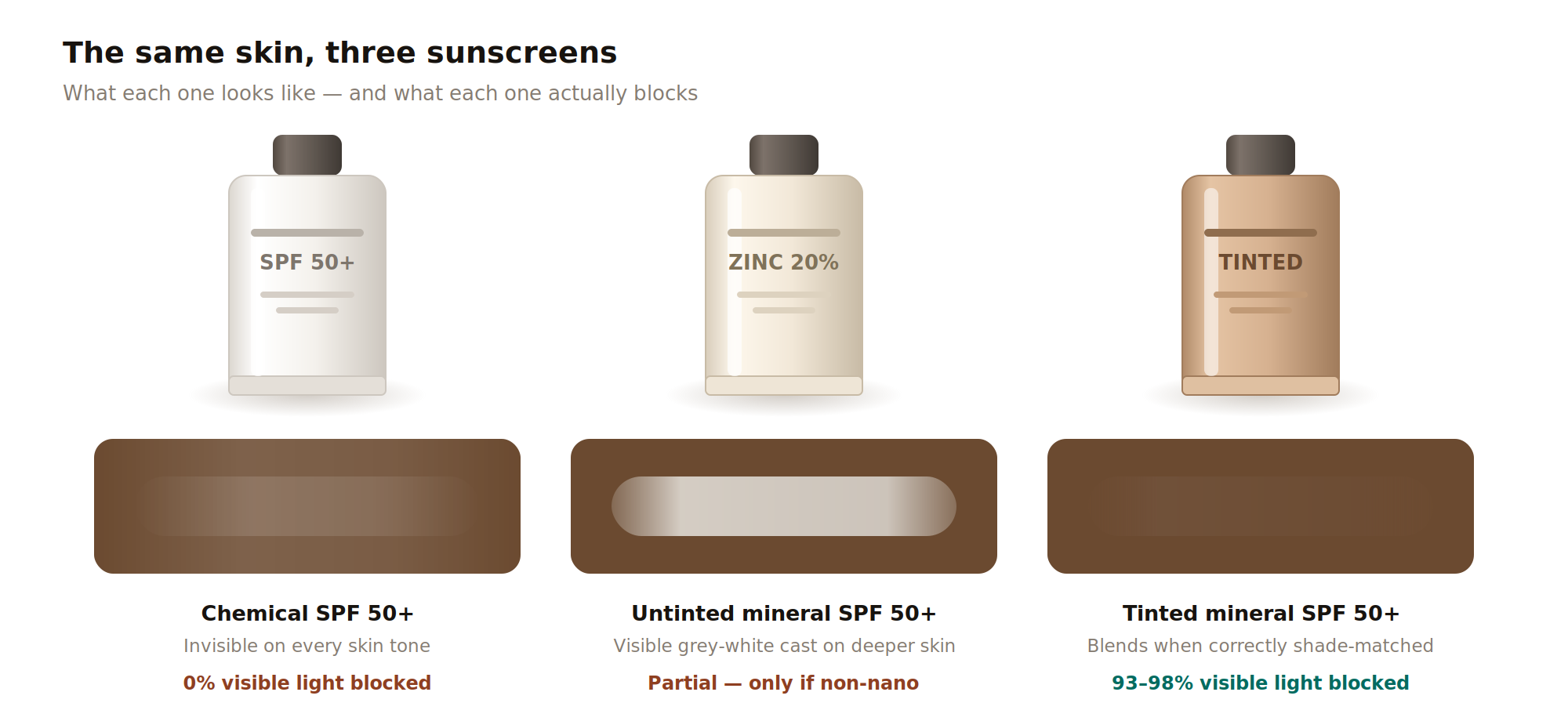
Shot: Three sunscreen tubes standing on a warm neutral surface in soft directional daylight, with a swatch of each product smeared beside it on a mid-to-deep skin tone forearm. Left: clear/invisible mineral SPF 50+ (swatch invisible). Centre: untinted white zinc (swatch leaves a grey-white cast). Right: tinted SPF 50+ with iron oxides (swatch disappears into the skin). Labels turned away or de-branded.
Alt text: “Three sunscreens swatched on deep skin — an invisible chemical formula, an untinted zinc leaving a grey cast, and a tinted iron oxide sunscreen that blends seamlessly.” Filename:tinted-vs-untinted-sunscreen-skin-of-colour.jpg
What does adequate protection actually cost in Australia?
This was the question that prompted our review, because it is the one that decides whether a treatment plan survives contact with real life. We searched the Australian market for tinted SPF 30+ sunscreens available from brand or reputable-retailer channels, recorded price and volume, and calculated the annual cost of protecting the face and neck at the dose the Australasian College of Dermatologists recommends.
The result is confronting. Applied at guideline frequency — 5 mL to the face and neck, reapplied two-hourly — Australian tinted sunscreens cost between AUD $3,040 and $18,250 per year. Even at a much more modest twice-daily application, the range runs from about $730 to over $9,000.
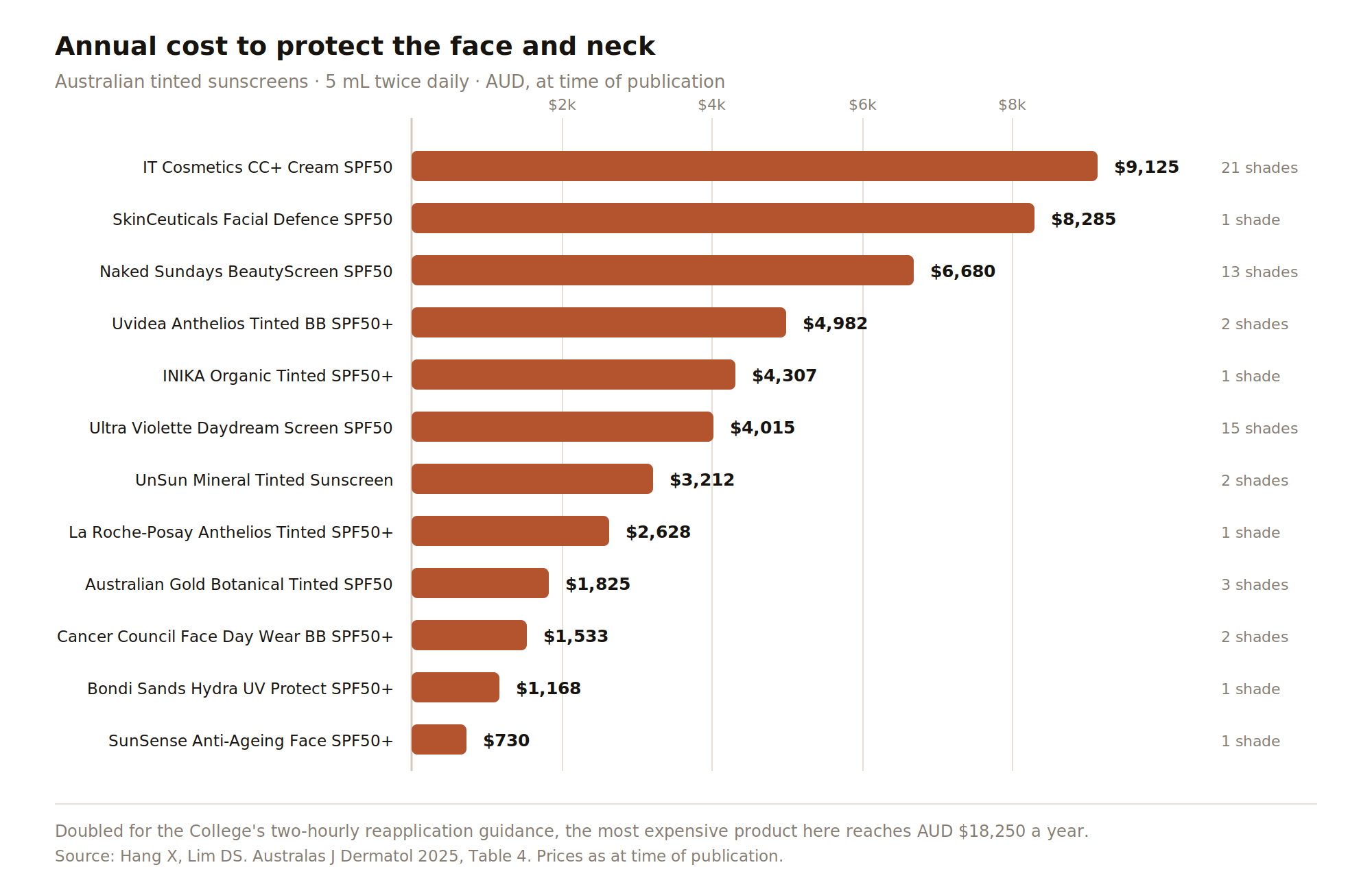
| Product | Shades | Key visible-light ingredients | Cost / mL | Annual (2×/day) |
|---|---|---|---|---|
| IT Cosmetics Your Skin But Better CC+ Cream SPF50 | 21 | TiO₂ 9.0%, ZnO 6.3%, iron oxides, niacinamide, vitamins C & E | $2.50 | $9,125 |
| SkinCeuticals Facial Defence SPF50 | 1 | ZnO 5%, TiO₂ 6%, iron oxides, vitamin E | $2.27 | $8,285 |
| Naked Sundays BeautyScreen SPF50 Peptide Foundation Tint | 13 | ZnO 12%, niacinamide, iron oxides | $1.83 | $6,680 |
| Uvidea Anthelios Tinted BB Cream SPF50+ | 2 | TiO₂ 10–15%, drometrizole trisiloxane, iron oxides | $1.37 | $4,982 |
| INIKA Organic Tinted Natural Sunscreen SPF50+ | 1 | ZnO 22.75%, iron oxides, pink algae extract | $1.18 | $4,307 |
| Ultra Violette Daydream Screen SPF50 Tinted Veil (secondary sunscreen — needs a primary SPF underneath, which adds to the cost) | 15 | ZnO 9.8%, iron oxides | $1.10 | $4,015 |
| Naked Sundays CabanaGlow SPF50 Mineral Glow Serum Drops | 4 | TiO₂ 3.3%, ZnO 14.9%, iron oxides, mica, pink algae extract | $1.13 | $4,106 |
| UnSun Cosmetics Mineral Tinted Sunscreen | 2 | ZnO 6.5%, TiO₂ 5.5%, iron oxides | $0.88 | $3,212 |
| Invisible Zinc Tinted Daywear SPF50+ | 2 | ZnO 27%, iron oxides | $0.70 | $2,555 |
| Aspect Sun Tinted Physical Protection SPF50+ | 1 | ZnO, TiO₂, iron oxides | $0.79 | $2,883 |
| La Roche-Posay Anthelios Tinted Fluid SPF50+ | 1 | TiO₂, ZnO, iron oxides | $0.72 | $2,628 |
| Avène Sunsitive Tinted Mineral Fluid SPF50+ | 1 | TiO₂ 11.4%, ZnO 14.6%, iron oxides, vitamin E | $0.72 | $2,628 |
| Australian Gold Botanical Tinted Face Sunscreen SPF50 | 3 | TiO₂ 4%, ZnO 4%, iron oxides | $0.50 | $1,825 |
| Natio Tinted Moisturiser SPF50+ | 3 | ZnO, iron oxides | $0.44 | $1,606 |
| Cancer Council Face Day Wear BB Cream SPF50+ | 2 | Iron oxides, açai, kakadu plum, green tea, vitamin E | $0.42 | $1,533 |
| Sukin SPF30 Sheer Touch Tinted Sunscreen Lotion | 2 | ZnO 21.5%, iron oxides | $0.42 | $1,520 |
| Bondi Sands Hydra UV Protect SPF50+ Tinted | 1 | Iron oxides | $0.32 | $1,168 |
| NIVEA SUN UV Face BB Cream SPF50+ | 1 | TiO₂ ~10%, iron oxides | $0.30 | $1,095 |
| MooGoo Tinted Face Sunscreen SPF40 | 1 | ZnO, iron oxides | $0.27 | $985 |
| QV Face Tinted Moisturising Day Cream SPF30+ | 1 | TiO₂, iron oxides, niacinamide | $0.21 | $766 |
| SunSense Anti-Ageing Face SPF50+ Tinted | 1 | Niacinamide, iron oxides | $0.20 | $730 |
US survey data show people with lighter skin spend an average of USD $61 a year on sunscreen, versus $182 for those with darker skin tones.52 The people who need visible light protection most are paying roughly three times as much for it — a consequence of smaller customer bases, fewer manufacturers and higher production and distribution costs.13
What I do with this in clinic: I ask what a patient can sustainably spend before I recommend anything. A $20 tinted sunscreen used correctly every day beats an $80 one used twice a week, every single time. Adherence is the variable that determines outcome, and cost is the biggest single threat to adherence.
How do I choose the right shade?
Shade is not vanity. A sunscreen that leaves a grey or ashen cast will not be worn, and a sunscreen that is not worn has an SPF of zero. Poor colour matching is one of the two or three biggest barriers to compliance in skin of colour, and it is the barrier the Australian market handles worst — most local tinted sunscreens offer one or two shades.
Matching in practice
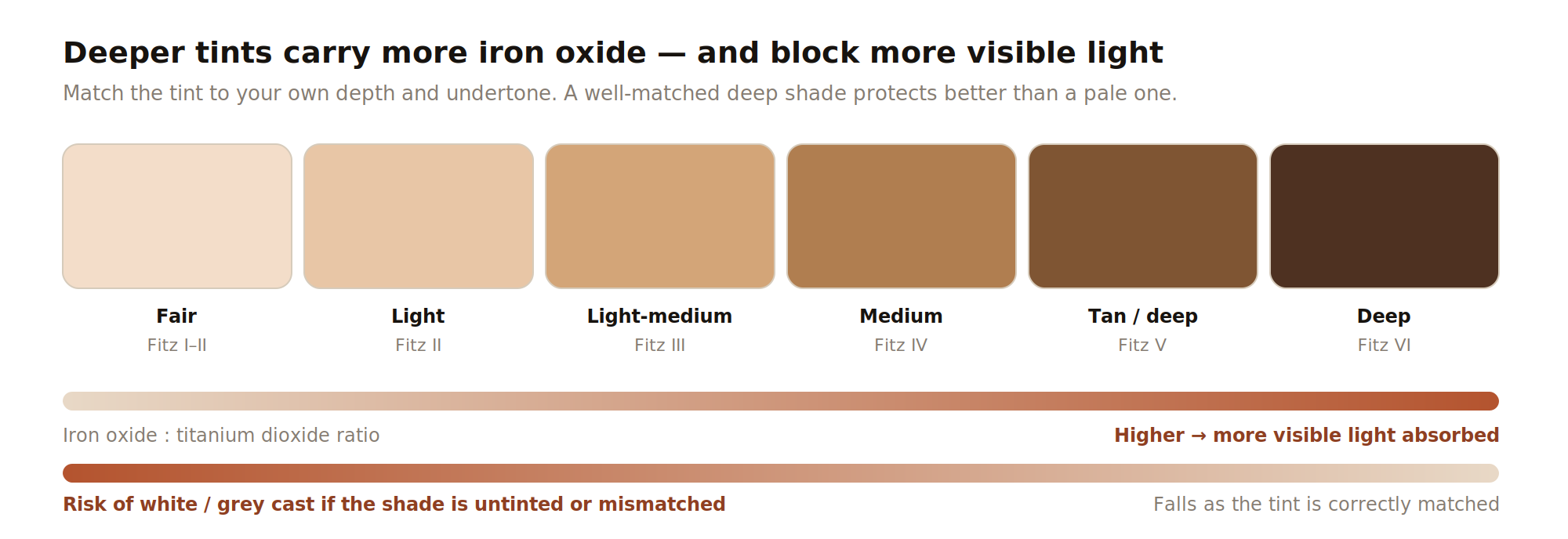
- Match both depth and undertone. Depth is fair, light, medium or deep. Undertone is warm, cool or neutral — and undertone does not change with sun exposure, even though depth does.
- Avoid “universal” shades if your skin is very fair or deep. A universal tint is formulated for the middle of the range and will read grey at the ends of it.
- Prefer brands with several shades. A three-shade line will match far more people than a one-shade line, even if the one-shade product has better ingredients.
- Test along the jawline, not the hand. Check it in daylight, and check it again after 15 minutes — many mineral tints oxidise slightly as they set.
- Deeper shades contain more iron oxide relative to titanium dioxide. That is why a well-matched deeper tint often gives better visible light protection than a pale one.
How much sunscreen, and how often?
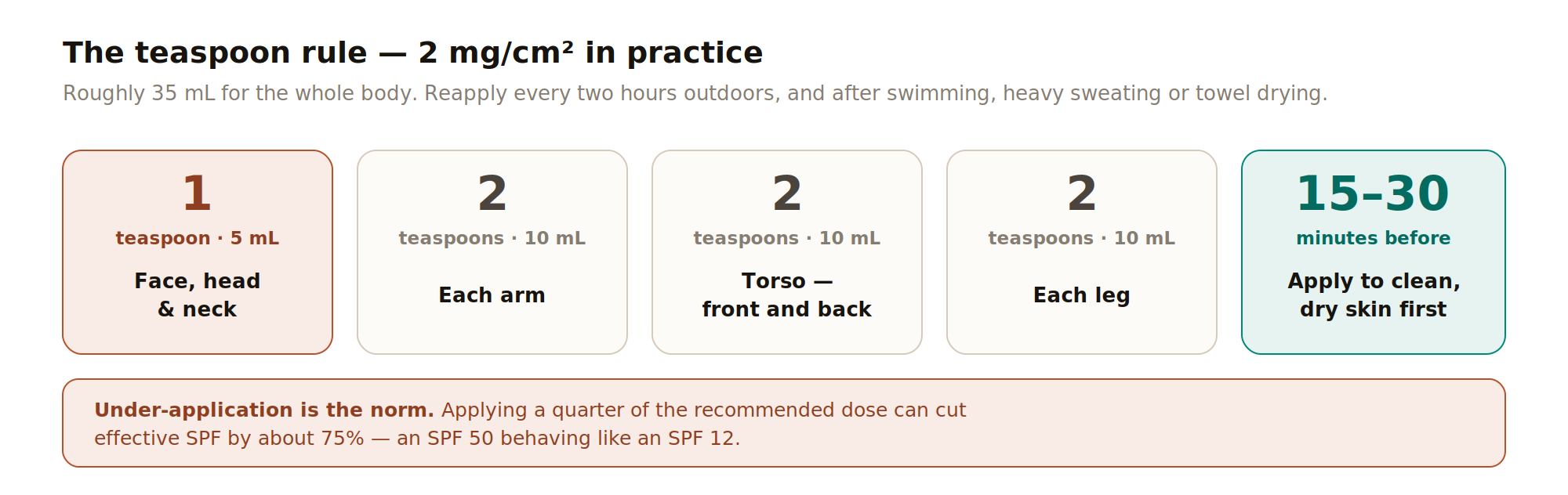
Dose is where most photoprotection plans quietly fail. The Australasian College of Dermatologists recommends SPF 50+ applied at 2 mg/cm² — about 35 mL for the whole body, or 5 mL (one teaspoon) for the face, head and neck.36
In practice, most people apply a quarter to a half of that.37 The penalty is not proportional: applying 0.5 mg/cm² — a quarter of the recommended dose — can reduce your effective SPF by approximately 75%.38 An SPF 50 applied thinly may be behaving like an SPF 12.
Order of application
- Cleanse; apply active skincare and let it absorb.
- Apply sunscreen as the last step of skincare, before makeup.
- Wait 15–30 minutes before sun exposure so the film can bond to the skin — this reduces the chance it is compromised by sweat, water or physical contact.
- Reapply every two hours outdoors, and immediately after swimming, heavy sweating or towel drying.
Iron oxide tints can stain clothing, towels and face masks. Ordinary laundry detergent removes it. Do not let this be the reason you stop — a light-coloured collar is a cheaper problem than a relapse of melasma.
Can makeup foundation count as visible light protection?
Yes — and this is the most useful cost strategy I can offer.
Many makeup foundations are rich in iron oxides. Layering an iron-oxide-rich foundation over a physical (mineral) sunscreen gives you visible light protection and avoids the white cast, at a fraction of the cost of a dedicated multi-shade tinted SPF.17 Foundations also come in far more shades than sunscreens do, which solves the matching problem at the same time.
Two caveats. Foundation is not a substitute for sunscreen — it does not carry a reliable SPF and is not water-resistant, so it goes over a proper SPF 50+, never instead of it. And reapplication is harder mid-day; a tinted mineral powder or a tinted stick is the practical top-up.
Affordable broad-spectrum SPF 50+ mineral sunscreen → iron-oxide-rich foundation matched to your shade → tinted powder or stick for two-hourly top-ups. This gets most patients to genuine visible light protection for well under $200 a year.
What is the second layer of defence after sunscreen?
No sunscreen, however good, gets applied perfectly at every exposure. Everything below is protection that does not depend on your technique.
| Measure | What it delivers | Practical guidance |
|---|---|---|
| Wide-brimmed hat | Approximately SPF 7 to the face | A brim of 7.5 cm or more. Caps do not protect the cheeks — the exact site melasma favours. |
| Clothing | UPF 15–24 good · 25–39 very good · 40–50 excellent | Tightly woven, darker fabrics perform best. Wet or stretched fabric performs worse. |
| Shade & timing | Removes the exposure entirely | Avoid outdoor activity when the UV index is 3 or higher. Remember visible light is present whenever it is light out. |
| Sunglasses / tinted lenses | Blue lenses absorb visible light 400–500 nm; yellow and red lenses protect against both UV and VL | Relevant for periorbital pigmentation and for anyone driving long distances. |
| Window film | Standard glass blocks UVB but transmits UVA and visible light | Worth considering for car side windows and a work desk beside a window. |
Only 38% of Australians use sun protection year-round.9 Winter and overcast days still deliver substantial visible light — and visible light is not seasonal in the way sunburn risk is.
Do antioxidants and oral supplements help?
Visible light exposure accounts for around 50% of the reactive oxygen species generated in skin.6 That gives antioxidants a rational role — mopping up the free radicals that physical blockers do not prevent from forming.
- Topical: L-ascorbic acid (vitamin C), vitamin E and thiamidol have shown promise in reducing ROS-mediated pigmentation. Stabilising these antioxidants within a sunscreen formulation remains a technical challenge, and further research is needed to confirm their effectiveness.48
- Oral: oral antioxidants — Polypodium leucotomos extract chief among them — have shown promise in improving pigmentation by reducing reactive oxygen species.47 Adding antioxidants and free radical scavengers may also help guard against infrared radiation.6
- Formulation extras worth having: niacinamide (vitamin B3) for its depigmenting action, plus emollients and humectants for tolerability — which drives daily use.
Antioxidants are beneficial but cannot replace the physical protection of iron oxides, which effectively reduce the severity of hyperpigmentary disorders and prevent relapse.49 Tint first, antioxidants second.
Related reading on this site: antioxidants for melasma, Polypodium leucotomos and melasma supplements.
Why are the Australian options so limited?
Australia has some of the strictest sunscreen regulation in the world, and that regulation cuts both ways.
The Therapeutic Goods Administration regulates primary sunscreens and some secondary sunscreens (SPF 15+ moisturisers and skincare) as therapeutic goods, tested to Australian Standard AS/NZS 2604. Some cosmetic sunscreens — lip products and tinted base make-up among them — are excluded from that framework. Those products often carry lower SPF, lack broad-spectrum protection and are not water-resistant.
The consequence for patients is a smaller shelf. Colour-matched tinted sunscreens that are readily available in the US or Europe frequently are not marketed here, and the ones that are tend to be the expensive imports.
Many patients — reasonably — look overseas for better shade ranges and lower prices. Understand the trade-off: products bought this way are not TGA-approved and their efficacy is unverified. SPF claims made under a different testing standard may not hold up under Australian conditions, and there is no local post-market surveillance behind them. If you do buy overseas, treat the SPF claim conservatively and be scrupulous about reapplication.
There is also a growing misinformation problem. Websites and beauty magazines aimed at skin-of-colour audiences frequently recommend expensive chemical sunscreens — often without dermatological input — and social media influencers have circulated claims that sunscreen is toxic.59 Neither serves patients with pigmentary disorders well.
Photoprotection by condition
The principles are shared, but the emphasis shifts by diagnosis.
Melasma
Affects approximately 8% of the Australian pigmentary-disorder population and around 1% globally, with higher prevalence in Southeast Asian, Middle Eastern, Mediterranean African, Hispanic American and Brazilian populations. Action spectrum: visible light (particularly high-energy visible light), long-wave UVA1 and UVB. Melasma is a refractory, relapsing condition, and no single therapeutic approach is proven to be effective. Tinted sunscreen is listed among the four foundational management strategies alongside trigger removal, topical hydroquinone and tranexamic acid. Without visible light protection, the results of procedural treatments are prone to relapse. More on melasma.
Post-inflammatory hyperpigmentation (PIH)
Around 11% of the Australian pigmentary-disorder burden, and more common in skin of colour — especially where there is pre-existing hyperpigmentation. Action spectrum: visible light, UVR, and ambient light alone in darker phototypes. Broad-spectrum tinted sunscreen should be applied from at least two weeks before any procedure that can induce inflammatory dermatoses, and continued for 15–30 days on treated areas after the inflammation resolves. Higher-SPF products matter here: SPF 60 or above has been shown to be more effective than SPF 30 for PIH prevention. More on PIH.
Acquired dermal macular hyperpigmentation — ashy dermatosis, erythema dyschromicum perstans, lichen planus pigmentosus
Predominantly affects darker phototypes, Latin Americans, Asians, South Asians and Middle Eastern populations. Action spectrum: visible light and UVR. Tinted sunscreens may be particularly valuable here, because tinted sunscreens may be particularly valuable in preventing the worsening of pigmentation, and dermal macular hyperpigmentation is more common in darker phototypes. More on ashy dermatosis.
Solar lentigines (sun spots)
The most common pigmentary disorder in Australia at around 37% of cases. More prevalent in lighter phototypes but appears earlier and more prominently in Asian populations than in Europeans. Action spectrum: visible light and UVR. Solar lentigo carries a notable quality-of-life impact — 15% of affected respondents reported a DLQI score above 10/30. More on age spots.
Dr Lim’s practical protocol
Three tiers. Pick the one you will actually sustain — that decision matters more than which product you choose within a tier.
| Tier | Approach | Indicative annual cost |
|---|---|---|
| Essential Budget-conscious, still effective |
Affordable tinted SPF 50+ (single shade, $0.20–$0.45/mL) applied at 5 mL each morning · iron-oxide-rich foundation matched to your shade over the top · wide-brimmed hat and shade discipline · reapply with a tinted powder or stick at midday. | $150–$400 |
| Standard What most of my melasma patients use |
Mid-priced multi-shade tinted mineral SPF 50+ ($0.40–$0.80/mL), 5 mL morning and a genuine midday reapplication · topical vitamin C in the morning · UPF 40–50 clothing and a 7.5 cm brim outdoors · car and desk window film. | $500–$1,200 |
| Maximal Active treatment phase, post-procedure, or refractory disease |
Cosmetically elegant multi-shade tinted SPF 50+ reapplied two-hourly · topical antioxidants morning · oral Polypodium leucotomos in high-exposure months · strict avoidance when UV index ≥ 3 · tinted lenses · full non-sunscreen stack. | $1,500–$4,000+ |
The best sunscreen for your pigmentation is the tinted, broad-spectrum SPF 50+ that matches your skin, that you can afford to use at 5 mL a day, and that you will still be using in six months. Everything else is optimisation.
Once photoprotection is genuinely under control, in-clinic treatment becomes worthwhile. Explore our melasma treatments, including Cosmelan, pico lasers, RF microneedling with Sylfirm X and dermal remodelling. Sun protection is what makes those treatments hold.
Read the full peer-reviewed paper
Everything on this page is drawn from our review article in the Australasian Journal of Dermatology. The full paper includes the complete cost tables for Australian and United States tinted sunscreens, the full list of TGA-approved UV filters with maximum concentrations, and condition-by-condition management tables.
Australian Sunscreens: The Price of Protection for Skin of Colour With Pigmentary Disorders
Hang X, Lim DS. Australasian Journal of Dermatology. 2025;0:1–17. doi:10.1111/ajd.14423 · Received 7 October 2024 · Accepted 24 January 2025 · © 2025 Australasian College of Dermatologists.
Read it here
Frequently asked questions
Is SPF 50+ enough for melasma?
No. SPF rates protection against UVB only, and Australian broad-spectrum labelling adds a UVA threshold — neither covers visible light, which is the main driver of melasma. You need an SPF 50+ that is also tinted with iron oxides. The SPF number and the tint are two separate requirements.
What is the best sunscreen for melasma in Australia?
The best sunscreen is a broad-spectrum SPF 50+ that contains iron oxides and non-nano titanium dioxide, is matched to your skin depth and undertone, and is priced so you can apply 5 mL every day without rationing it. Among Australian options, tinted mineral formulations from Natio, Australian Gold Botanical, Invisible Zinc, La Roche-Posay and Avène all satisfy the ingredient requirement at very different price points. Check whether a product is a primary sunscreen or a secondary one — some tinted veils are designed to go over a primary SPF, not to replace it. Shade match and daily adherence matter more than brand.
Do I need tinted sunscreen if I have dark skin?
Especially if you have dark skin. Higher melanin protects against UVB but not against visible light, and Fitzpatrick III–VI skin pigments more readily in response to visible light because of the Opsin-3 pathway. Deeper tinted shades also contain proportionally more iron oxide, so a correctly matched deep shade gives more visible light protection, not less.
Does mineral sunscreen block visible light?
Only if it is non-nano and tinted. Nanosized (<100 nm) zinc oxide and titanium dioxide absorb UV photons like chemical filters and are transparent to visible light — which is exactly why they feel and look so elegant. Pigmentary-grade, non-micronised particles reflect and scatter visible light, but tend to leave a chalky residue unless tinted with iron oxides.
How much tinted sunscreen should I apply to my face?
5 mL — about one teaspoon — for the face, head and neck, which corresponds to 2 mg/cm². Most people apply a quarter to a half of this. Applying a quarter of the recommended dose can reduce effective SPF by around 75%.
How much does sunscreen for melasma cost per year in Australia?
Between AUD $3,040 and $18,250 a year for the face and neck if you follow two-hourly reapplication guidance, and roughly $730 to $9,125 at twice-daily application, depending on the product. Layering an iron-oxide-rich foundation over an affordable mineral sunscreen is the most effective way to bring that cost down without losing visible light protection.
Does blue light from my phone or computer worsen melasma?
Almost certainly not on its own. High-energy visible light from electronic devices has an irradiance roughly 100 to 1,000 times lower than sunlight and is insufficient to induce pigmentation. Daylight coming through a window is a genuine exposure and worth managing; your screen is not.
Can I use makeup foundation instead of tinted sunscreen?
Not instead — but very effectively on top. Iron-oxide-rich foundations provide real visible light protection and come in far more shades than sunscreens do. They lack reliable SPF and water resistance, so they layer over a broad-spectrum SPF 50+, not in place of it.
Do I need sunscreen indoors?
If you sit near a window, yes. Standard window glass blocks UVB but transmits UVA and visible light. If you are in a windowless room all day, the exposure is negligible. Most people are somewhere in between — so apply in the morning and reapply if you spend time near daylight.
Will tinted sunscreen stain my clothes?
It can. Iron oxides may mark collars, towels and face masks. Regular laundry detergent removes the staining, and this is not a reason to abandon the product.
Is it safe to buy tinted sunscreen from overseas?
Overseas products often offer better shade ranges and lower prices, but they are not TGA-approved and their efficacy under Australian conditions is unverified. SPF testing standards differ between regions. If you choose to, treat the stated SPF conservatively and be strict about reapplication.
How long before I see improvement in my pigmentation?
Consistent use of iron-oxide-containing sunscreen has been shown to improve dyschromia within 60 days and to prevent relapse at six months. Combined with topical therapy, adding visible light protection improved MASI score reduction from 62% to 78% in a randomised comparison.
About the author

Dr Davin S. Lim — Dermatologist, Brisbane & Sydney
Dr Davin Lim is a procedural and laser dermatologist practising in Brisbane and Sydney, with a clinical and research focus on pigmentary disorders in skin of colour. He is co-author of Australian Sunscreens: The Price of Protection for Skin of Colour With Pigmentary Disorders (Australasian Journal of Dermatology, 2025), which examined the availability, formulation and cost of visible-light-protective sunscreens in the Australian market.
He consults at The Melasma Clinic on melasma, post-inflammatory hyperpigmentation, acquired dermal macular hyperpigmentation and laser treatment of pigment. About the practice · Book a consultation
Medical disclaimer. This page is general education, not personal medical advice. Pigmentary disorders vary considerably between individuals, and product availability and pricing change over time. Please consult a dermatologist about your own skin before starting or changing treatment.
References
Numbering follows the source review. The full 60-item reference list appears in the downloadable paper.
- Austin E, Geisler AN, Nguyen J, et al. Visible light. Part I: Properties and cutaneous effects of visible light. J Am Acad Dermatol. 2021;84(5):1219–1231.
- Kohli I, Chaowattanapanit S, Mohammad TF, et al. Synergistic effects of long-wavelength ultraviolet A1 and visible light on pigmentation and erythema. Br J Dermatol. 2018;178(5):1173–1180.
- Duteil L, Queille-Roussel C, Lacour JP, Montaudié H, Passeron T. Short-term exposure to blue light emitted by electronic devices does not worsen melasma. J Am Acad Dermatol. 2020;83(3):913–914.
- Lim HW, Kohli I, Ruvolo E, Kolbe L, Hamzavi IH. Impact of visible light on skin health: the role of antioxidants and free radical quenchers in skin protection. J Am Acad Dermatol. 2022;86:S27–S37.
- Regazzetti C, Sormani L, Debayle D, et al. Melanocytes sense blue light and regulate pigmentation through Opsin-3. J Invest Dermatol. 2018;138(1):171–178.
- Mahmoud BH, Ruvolo E, Hexsel CL, et al. Impact of long-wavelength UVA and visible light on melanocompetent skin. J Invest Dermatol. 2010;130(8):2092–2097.
- Kerob DK, Passeron T, Alexis A, et al. Pigmentary disorders, prevalence, impact on quality of life and social stigmatization: results of the first large international survey. J Am Acad Dermatol. 2024;91(3):AB280.
- Taylor SC. Epidemiology of skin diseases in people of color. Cutis. 2003;71(4):271–275.
- Bens G. Sunscreens. Adv Exp Med Biol. 2014;810:429–463.
- Lyons AB, Trullas C, Kohli I, Hamzavi IH, Lim HW. Photoprotection beyond ultraviolet radiation: a review of tinted sunscreens. J Am Acad Dermatol. 2021;84(5):1393–1397.
- Xu S, Kwa M, Agarwal A, Rademaker A, Kundu RV. Sunscreen product performance and other determinants of consumer preferences. JAMA Dermatol. 2016;152(8):920–927.
- Rodrigues MA, Ross AL, Gilmore S, Daniel BS. Australian dermatologists’ perspective on skin of colour: results of a national survey. Australas J Dermatol. 2018;59(1):23–30.
- Song H, Beckles A, Salian P, Porter ML. Sunscreen recommendations for patients with skin of color in the popular press and in the dermatology clinic. Int J Womens Dermatol. 2021;7(2):165–170.
- Castanedo-Cazares JP, Hernandez-Blanco D, Carlos-Ortega B, Fuentes-Ahumada C, Torres-Álvarez B. Near-visible light and UV photoprotection in the treatment of melasma: a double-blind randomized trial. Photodermatol Photoimmunol Photomed. 2014;30(1):35–42.
- The Australasian College of Dermatologists. How do I protect my skin from the sun? 2022.
- Henderson SI, King KL, Karipidis KK, Tinker RA, Green AC. Effectiveness, compliance and application of sunscreen for solar ultraviolet radiation protection in Australia. Public Health Res Pract. 2022;32(1):e3212205.
- Ou-Yang H, Stanfield J, Cole C, Appa Y, Rigel D. High-SPF sunscreens (SPF ≥ 70) may provide ultraviolet protection above minimal recommended levels by adequately compensating for lower sunscreen user application amounts. J Am Acad Dermatol. 2012;67(6):1220–1227.
- Therapeutic Goods Administration. Version 3 Australian Regulatory Guidelines for Sunscreens. 2023.
- Dumbuya H, Grimes PE, Lynch S, et al. Impact of iron-oxide containing formulations against visible light-induced skin pigmentation in skin of colour individuals. J Drugs Dermatol. 2020;19(7):712–717.
- Schalka S. New data on hyperpigmentation disorders. J Eur Acad Dermatol Venereol. 2017;31(5):18–21.
- Schalka S, de Paula Corrêa M, Sawada LY, Canale CC, de Andrade TN. A novel method for evaluating sun visible light protection factor and pigmentation protection factor of sunscreens. Clin Cosmet Investig Dermatol. 2019;12:605–616.
- Jansen R, Wang SQ, Burnett M, Osterwalder U, Lim HW. Photoprotection. Part I: photoprotection by naturally occurring, physical, and systemic agents. J Am Acad Dermatol. 2013;69(6):853.
- Lim HW, Arellano-Mendoza MI, Stengel F. Current challenges in photoprotection. J Am Acad Dermatol. 2017;76(3S1):S91–S99.
- Boukari F, Jourdan E, Fontas E, et al. Prevention of melasma relapses with sunscreen combining protection against UV and short wavelengths of visible light: a prospective randomized comparative trial. J Am Acad Dermatol. 2015;72(1):189–190.
- Geisler AN, Austin E, Nguyen J, Hamzavi I, Jagdeo J, Lim HW. Visible light. Part II: Photoprotection against visible and ultraviolet light. J Am Acad Dermatol. 2021;84(5):1233–1244.
- Weig EA, Tull R, Chung J, Brown-Joel ZO, Majee R, Ferguson NN. Assessing factors affecting sunscreen use and barriers to compliance: a cross-sectional survey-based study. J Dermatolog Treat. 2020;31(4):403–405.
- Akamine KL, Gustafson CJ, Davis SA, Levender MM, Feldman SR. Trends in sunscreen recommendation among US physicians. JAMA Dermatol. 2014;150(1):51–55.
- Ries J. Social media influencers claim sunscreen is toxic. 2024.
Source review. Hang X, Lim DS. Australian sunscreens: the price of protection for skin of colour with pigmentary disorders. Australas J Dermatol. 2025;0:1–17. doi:10.1111/ajd.14423

